Ergotherapie
"Ergotherapie supports participation in meaningful activities as a pathway to physical and mental health and quality of life. Ergotherapists possess knowledge about development, underlying skills, and intervention strategies needed to promote effective participation across nine areas of occupation"
(Bazyk, 2022)
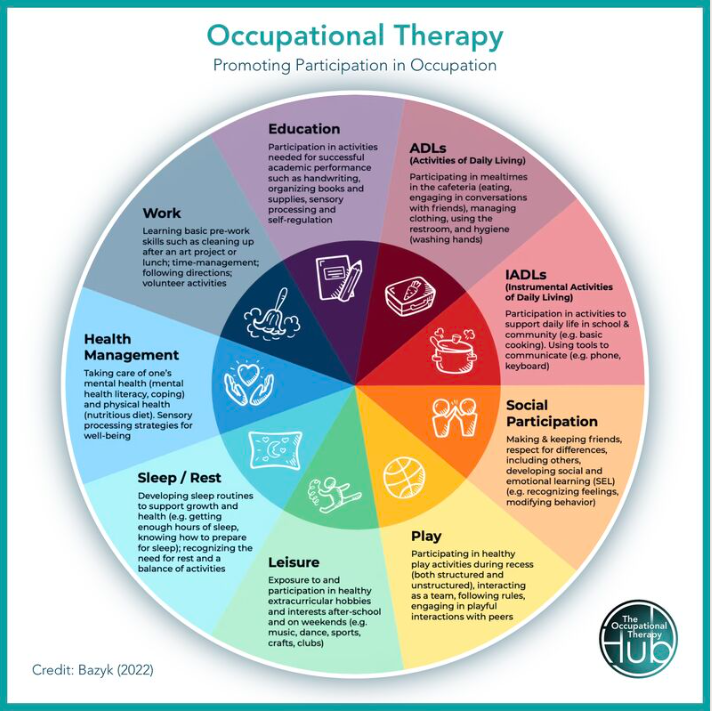
Ergotherapie is a health profession that offers a person-centered intervention for individuals whose physical, cognitive, mental health, or overall well-being limits their ability to carry out the everyday activities – occupations – that give meaning, structure, and identity to their lives.
Occupations include self-care, home management, school or work participation, mobility, access to the community, sports and hobbies, and family life. They are what define us, connect us to others, and support our psycho-physical balance. Ergotherapists recognize that "doing" has a direct impact on health and well-being: occupations allow us to "do, be, and become" (Wilcock, 1998), shaping our identity and offering opportunities for growth, learning, and personal fulfillment.
When illness, injury, or a condition of vulnerability limits participation in one or more of these areas, daily life loses meaning and coherence. Through the Ergotherapie process, we support the person in defining realistic and meaningful goals, sustaining the recovery or maintenance of independence while also building a complete social and occupational profile.
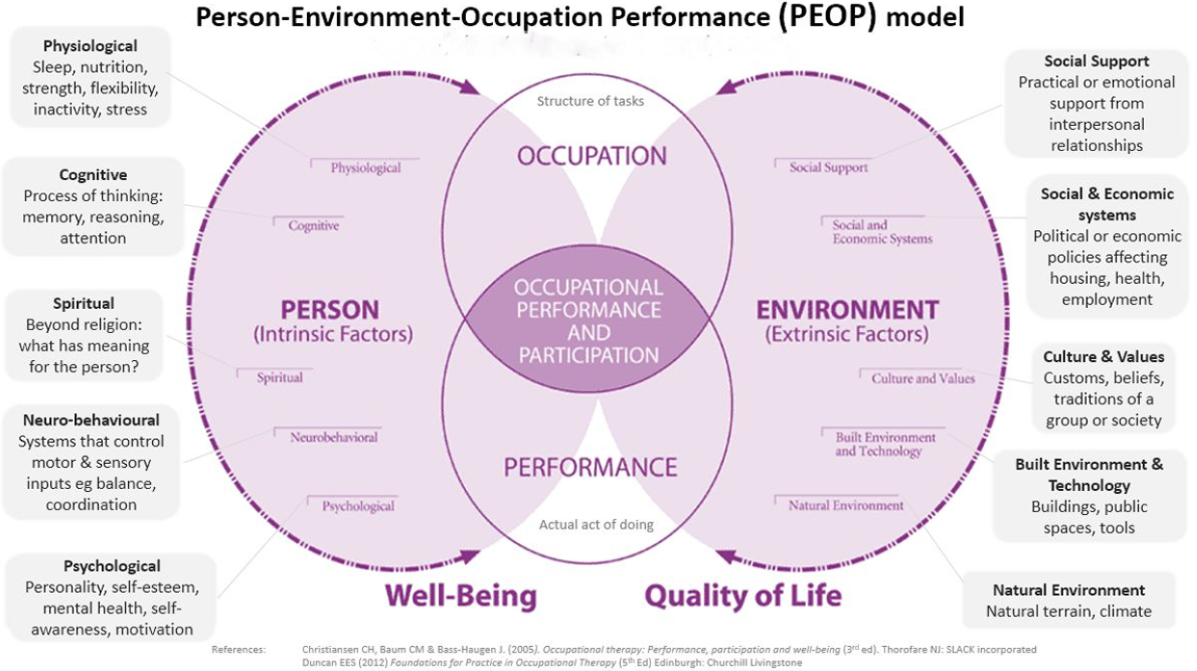
"The Ergotherapeutin is the professional who realigns person, environment, and occupation so that life can begin to flow again in the chosen direction." Christiansen & Baum
This image shows an international Ergotherapie model that clearly summarizes the different components involved in our rehabilitation work.
An assessment that considers the whole person
Ergotherapie rehabilitation addresses the physical, cognitive, sensory, emotional, and social components of the person. The initial analysis makes it possible to:
grade activities according to ability
identify compensatory strategies
propose environmental adaptations
promote autonomy, safety, and participation
The social profile: a key lens for rehabilitation
Alongside the analysis of the occupational areas that characterize the individual, the Ergotherapeutin builds an in-depth social profile, essential to understanding the person in their real-life context. This process explores both the patient’s characteristics and the features of the environment in which they live:
social roles (parent, student, worker, caregiver, member of a community)
routines and habits that structure the day
personal characteristics and emotional dynamics that may support or hinder the rehabilitation process (yellow flags)
family, cultural, and environmental context, with the beliefs and meanings that arise from it
formal and informal support networks
values, interests, and motivation
social, architectural, or relational barriers that limit participation
This profile becomes a lens through which the intervention can be directed toward a rehabilitation process that is truly personalized, sustainable, and respectful of individual identity. The person is placed at the center of the pathway and takes an active role in agreeing on and reaching therapeutic goals.
Areas of Ergotherapie specialization
Based on these competencies, Ergotherapie can specialize in different fields of intervention:
Neurology
Pediatrics
Geriatrics
Psychiatry
Orthopedics – Upper limb rehabilitation